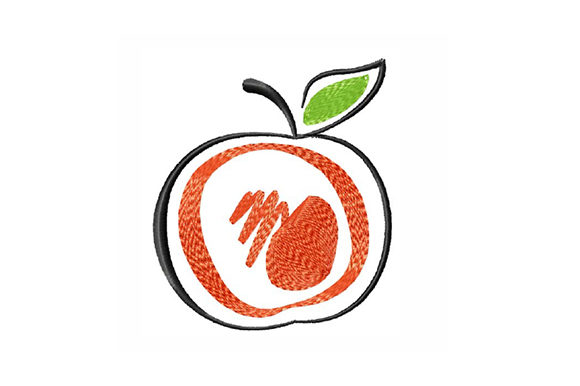
Hand Drawn Apple
A Designer’s First Impression: Whimsy with Purpose
When I opened Hand Drawn Apple for the first time, what struck me wasn’t just its charm—it was its quiet confidence. This isn’t a hyper-polished vector apple or a stiff clipart motif. It’s loose, warm, and unmistakably hand-drawn: soft curves, gentle asymmetry, a slight tilt to the stem, and subtle line weight variation that suggests pencil pressure—not algorithmic perfection. As a designer who’s stitched hundreds of food-themed embroidery files, I immediately sensed this would read beautifully on fabric—not as decoration, but as *intention*. It feels like something you’d sketch in a recipe journal, then stitch onto a tea towel for your sister’s housewarming. That authenticity is rare—and valuable.
Real-World Test: Embroidering It Onto a Linen Kitchen Towel
Last week, I used Hand Drawn Apple on a natural linen towel for a small-batch boutique order. No frills—just black 40-weight thread, medium tear-away stabilizer, and a standard 4" hoop. The result? Clean satin-stitched contours, breathable fill-stitch areas (no puckering), and a shape that held its personality even at 3.5" tall. Customers noticed it instantly—not because it shouted, but because it *belonged*. One buyer emailed saying, “It looks like it grew there.” That’s the goal: a design that enhances, not interrupts, the handmade product.
Where It Shines (and Where It Asks for Care)
Hand Drawn Apple excels in projects where warmth and approachability matter most:
- Custom apparel: Works beautifully on cotton sweatshirts and canvas tote bags—its open shapes avoid heavy stitch density, so it drapes naturally without stiffness.
- Kitchen textiles: Ideal for tea towels, aprons, and oven mitts. The apple’s organic flow complements rustic, modern, and farmhouse aesthetics alike.
- Personalized gifts: Paired with a monogram or short phrase (“Fresh Picked,” “Good Things Grow”), it elevates baby bibs, nursery pillows, or holiday kitchen sets.
- Etsy & small shop listings: Its distinct hand-drawn quality helps digital embroidery files stand out in crowded Food and Embroidery categories—especially when shown in clean printable mockups on neutral backgrounds.
But let’s be practical: Hand Drawn Apple isn’t built for every surface. Avoid using it on:
- Ultra-thin fabrics (like lightweight rayon or silk) without extra stabilizer—fine interior lines may shift.
- Densely textured fabrics (bouclé, heavy terry cloth) where delicate stem details could blur.
- Curved, high-tension surfaces like structured caps—its gentle curves don’t auto-adjust to complex 3D geometry.
- Dark fabrics with light thread unless you’ve tested contrast first; some versions of hand-drawn motifs lose definition without careful thread color selection.
What It Adds to Your Finished Product
This isn’t just about stitching a shape—it’s about signaling care. When customers see Hand Drawn Apple on a handmade apron or embroidered patch, they subconsciously register intentionality: the slight irregularity says “made by hand,” not mass-produced. That builds trust—especially for Etsy sellers and craft fair vendors whose buyers value authenticity over uniformity.
It also strengthens brand consistency. If your shop leans into botanical, seasonal, or slow-living themes, Hand Drawn Apple fits seamlessly alongside other food-inspired embroidery files—think pears, lemons, or wheat stalks—without visual competition. And because it avoids cliché (no shiny red gloss, no cartoon grin), it stays relevant across seasons and customer ages—from toddler onesies to wedding kitchen gifts.
Designer Notes You’ll Actually Use
Before stitching Hand Drawn Apple into your next project, do these five things:
- Test on scrap fabric first—especially if pairing it with applique design elements or layered stitches.
- Check thread color contrast on both light and dark backgrounds. A muted olive or deep burgundy often reads richer than basic red on natural fibers.
- Review stitch density in your embroidery software. If fill areas feel overly dense, reduce density slightly—linen and cotton breathe better with air.
- Confirm hoop size compatibility. While it scales well, very small versions (<2") may lose stem nuance—reserve those for simple running-stitch outlines only.
- Verify licensing before selling finished products or bundling it as part of a commercial embroidery collection. Not all machine embroidery designs allow resale of stitched items without permission.
Final Thought: A Design That Serves the Maker
As someone who’s rejected dozens of “cute apple” embroidery files for being too rigid, too generic, or too technically fussy, I keep coming back to Hand Drawn Apple—not because it’s perfect, but because it’s *practical*. It stitches cleanly, photographs well, resonates emotionally, and supports real business goals: repeat customers, cohesive collections, and handmade products that feel both personal and polished. Whether you’re embroidering a single holiday gift or building a full line of kitchen-themed design assets, this apple doesn’t demand attention—it earns it, quietly, one thoughtful stitch at a time.