Panda Bear: A Charming, Versatile Baby Animals Embroidery Design
First Impressions: Sweet, Simple, and Surprisingly Sophisticated
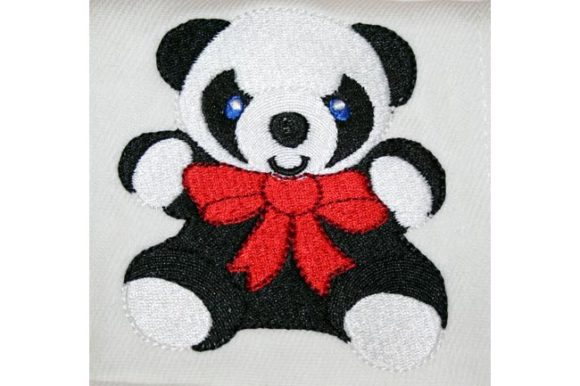
When I opened the Panda Bear embroidery file for the first time, I wasn’t expecting much beyond a cute silhouette—but what stood out immediately was its thoughtful balance. It’s not overly cartoonish, nor is it hyper-realistic. The shape is rounded and friendly, with soft curves that translate beautifully to stitch. The ears are generously proportioned, the eyes are expressive but minimal (no tiny black dots that vanish in fill stitch), and the nose has just enough definition to read clearly without demanding ultra-fine satin stitch. This isn’t a design shouting for attention—it’s one that invites touch, fits naturally on baby onesies or linen tea towels, and holds up at 4×4 hoop size without feeling cramped or oversimplified.
A Real-World Test: Stitching Panda Bear on a Cotton-Linen Blend Tote Bag
Last week, I used Panda Bear to embroider a custom tote for a local boutique’s nursery collection. The fabric was medium-weight cotton-linen—textured but stable—and I chose a matte black thread on natural beige. Right away, the design held its shape across the slight weave variation. No skipped stitches, no puckering, and the fill stitch density felt intentional: dense enough to avoid transparency on light fabric, yet breathable enough to keep the bag soft and drapey. Customers loved how the panda “sat” on the fabric—not floating, not sinking—just present, calm, and handmade in the best sense. That’s the quiet strength of Panda Bear: it elevates a simple tote into a curated, gift-ready item without needing bells or whistles.
Where Panda Bear Shines (and Where It Needs Care)
Panda Bear works especially well for:
- Baby embroidery—onesies, burp cloths, and crib bumpers—thanks to its gentle scale and lack of fine internal detail that could snag or fray;
- Sweatshirt embroidery and tote bag design, where bold, clean shapes read from a distance;
- Embroidered patch applications, since its outline and interior balance make it easy to trim cleanly after stitching;
- Holiday embroidery and wedding gifts (think monogrammed panda + initials on a linen pillow cover);
- Etsy seller mockups—its friendly tone pairs effortlessly with neutral backdrops in printable mockups, helping digital embroidery file listings feel warm and approachable.
That said, proceed thoughtfully with:
- Stretchy fabric: Use cutaway stabilizer and reduce top tension slightly—Panda Bear’s smooth curves can distort if the ground fabric shifts mid-stitch;
- Dark fabric: Test thread colors carefully—the design relies on contrast, not shading, so avoid low-contrast combos like charcoal on black;
- Curved surfaces (like caps): Panda Bear fits a standard front cap panel, but avoid placing it too close to the bill seam—its width fills the space nicely, but corners near the curve may need minor digitizing tweaks for commercial embroidery;
- Frequent-wash items: Confirm your thread choice (polyester over rayon) and secure jump stitches—this isn’t a delicate applique design, but durability still depends on execution.
What Panda Bear Adds to Your Finished Product—Beyond Cuteness
As a designer who ships hundreds of embroidered pieces a year, I pay attention to what happens *after* the hoop comes off. Panda Bear consistently lifts perceived value: customers describe it as “thoughtful,” “calm,” and “uniquely handmade”—not mass-produced. That matters for a craft business. It reads as intentional, not generic. On an Etsy listing, it helps your photos stand out among busier animal motifs. In a boutique setting, it supports brand consistency when paired with minimalist packaging or earth-toned apparel. And because it avoids aggressive outlines or excessive layering, it photographs well in both natural light and studio setups—critical for digital embroidery file previews and social media posts.
Practical Designer Notes Before You Stitch
Before using Panda Bear in client work, a small shop product, or a batch of personalized gifts, here’s what I always do:
- Run a test on scrap fabric matching your final project’s weight and texture—especially if using textured fabrics like terry cloth or bouclé;
- Check stitch density visually: zoom in on the panda’s chest area—does the fill stitch lay flat? Does it look solid, not webby or sparse?
- Confirm hoop size compatibility—this is a 4×4 design, so double-check placement on curved or narrow items like caps or baby hats;
- Inspect small details in your embroidery software: are the eyes fully digitized (not just implied), and does the nose have clean satin stitch edges?
- Try a black-and-white mockup: Panda Bear should retain legibility and charm even without color context;
- Review licensing terms before selling finished products or reselling the digital embroidery file—this is essential for Etsy sellers and creative entrepreneurs;
- Use appropriate stabilizer: tear-away for stable wovens, cutaway for knits or lightweight cottons, and consider topping for napped fabrics like fleece.
Final Thought: Panda Bear Is a Quiet Workhorse
It won’t dominate a trend report or go viral for complexity—but that’s exactly why it endures. Panda Bear is the kind of machine embroidery design that builds trust: with clients who want heirloom-quality baby embroidery, with craft fair shoppers who recognize skilled simplicity, and with fellow designers who know that restraint, clarity, and thoughtful digitizing are harder to get right than flash. Whether you’re stitching it on a kitchen towel for a holiday gift or scaling it for a boutique’s custom sweatshirt line, Panda Bear delivers consistent, professional results—without asking for extra effort. Just make sure you’ve checked your files, tested your setup, and chosen thread colors that let its gentle charm speak for itself.